


Four Flinders University researchers have been awarded almost $4.5 million in the latest round of Australian Research Council (ARC) Future Fellowships.
The grants will support research to make deep dives into improving soil quality, exploring South Australia’s sunken caves, understanding ancient evolution, as well as sustainable solutions to next-generation magnetic resonance devices.
The fellowships will be led by:
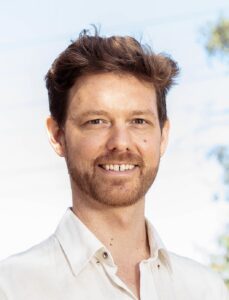
Professor Martin Breed: ‘Soil microbiomes for repairing climate-resilient ecosystems’
This project aims to strengthen the climate resilience of ecosystems under repair. Soil microbiomes – diverse communities of bacteria, fungi and other microbes that form the foundation of soil health – underpin ecosystem climate resilience but remain largely overlooked in restoration practice.
“By revealing how soil microbiomes support native plants under climate stress, developing effective ways to introduce them in real-world settings, and building new international networks for translation and training, this research will transform how we restore ecosystems in crisis,” says Professor Breed, Matthew Flinders Professor in Restoration Ecology, College of Science and Engineering.
“These advances will deliver new ways to repair biodiversity and support national goals for nature conservation, healthy soils, climate adaptation and sustainable growth.”
Dr John McCarthy: ‘Through the reeds: Archaeology of the waters of the Limestone Coast’
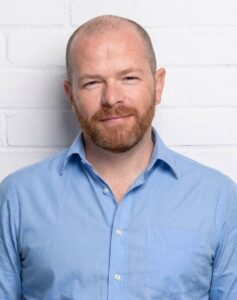
The Limestone Coast is one of Australia’s most archaeologically overlooked regions. It features spectacular sites including submerged caves and sinkholes that are time capsules of megafauna and paleoenvironmental data. They hold a clear potential for study of human material culture to address pressing questions in the deep history of Australasia.
“This project will deliver specialist Australian capacity and research excellence in marine archaeological survey, paleoenvironmental science, and community engagement to survey in and around caves, sinkholes, rivers and lakes as well as offshore,” says Dr McCarthy, Senior Lecturer in Maritime Archaeology, College of Human Sciences and Culture.
“Starting from an aquatic perspective, this project will re-define the investigation of human interactions with Australia’s changing environment.”
Dr McCarthy, who is the current president of the Australasian Institute for Maritime Archaeology, says the research will be conducted in close cooperation with Boandik Traditional Owners.
Dr Philip Norcott: ‘Transforming portable magnetic resonance through molecular innovation’

This project aims to solve the problem of low sensitivity in compact magnetic resonance instruments, such as hospital MRI scanners and nuclear magnetic resonance devices, by developing new chemical strategies to enhance detection at low magnetic fields.
It expects to generate new knowledge by designing molecules that improve signal strength, eliminating the need for powerful magnets and costly cooling systems. Expected outcomes include improved sensing of chemicals relevant in agriculture, environmental monitoring and manufacturing.
“This should provide significant benefits by improving the performance of compact, affordable instruments for detecting environmental contaminants and compounds used to verify product quality, supporting national priorities in environmental resilience and advanced manufacturing,” says Dr Norcott, Lecturer in Chemistry, College of Science and Engineering.
Dr Alice Clement: ‘First breath: Evolutionary origins of air breathing in early vertebrates’
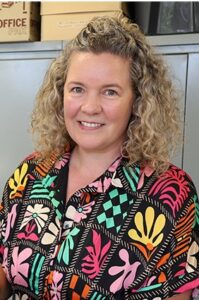
Thousands of vertebrates breathe air to survive, including humans. However, the drivers, conditions and timing of when air-breathing first evolved in terrestrial animals (tetrapods) remains unknown.
This project aims to address this long-standing evolutionary question using world-class fossils and rare specimens of iconic ‘living fossils’ (Indonesian coelacanth and Australian lungfish). The evolutionary drivers of air breathing will be revealed by synthesising 3D scan data with a novel analytical approach to identify anatomical proxies of air-breathing function in living and fossil animals.
“The research will also drive new insight for enhanced conservation efforts for these endangered Australasian species, and strengthen international links,” says Dr Clement, Lecturer in Palaeontology, College of Science and Engineering.
Dr Clement led the Flinders University Virtual Australian Museum of Palaeontology (VAMP) project and previously held a position at the Evolutionary Biology Center at Uppsala University in Sweden, working alongside international expert Professor Per Ahlberg.