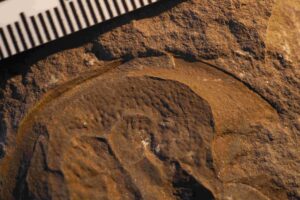
Ancient case of microbial death
A remarkably preserved horseshoe crab fossil from North America offers rare insight into some of the earliest known cases of animal disease in a Late Carboniferous […]


A remarkably preserved horseshoe crab fossil from North America offers rare insight into some of the earliest known cases of animal disease in a Late Carboniferous […]
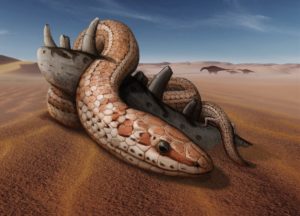
New fossils of an ancient legged snake, called Najash, shed light on the origin of the slithering reptiles. The fossil discoveries, revealed in Science Advances , […]
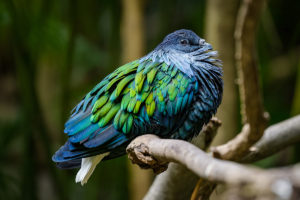
A new pigeon species, the Zealandian Dove, which is related to the extinct dodo, has been identified by Australian and NZ researchers. New Zealand only has […]
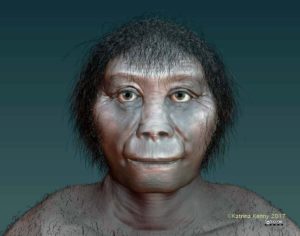
New research in Australia has found the tiny ‘hobbit’ people of Asia are not ancestors or even close relatives of modern humans. The most comprehensive study […]
The sex life of the biggest bird to have ever roamed the planet has been revealed – and it’s more akin to a goose than an emu.
Flinders University palaeontologists have cast new light on the behaviour of Australia’s top mammalian predator, the fearsome marsupial lion (Thylacoleo carnifex).
The Verco Medal – the highest honour bestowed by the Royal Society of South Australia – has been awarded to Flinders University’s internationally-esteemed palaeontologist, Professor John Long.
In a major evolutionary discovery, Flinders University palaeontologist Professor John Long (pictured) has found evidence to show that four-legged animals first developed the ability to breathe air as ancient fish in water.
The discovery of ancient fishes with rippling abdominal muscles shows that palaeontology still holds an important role in modern science.