

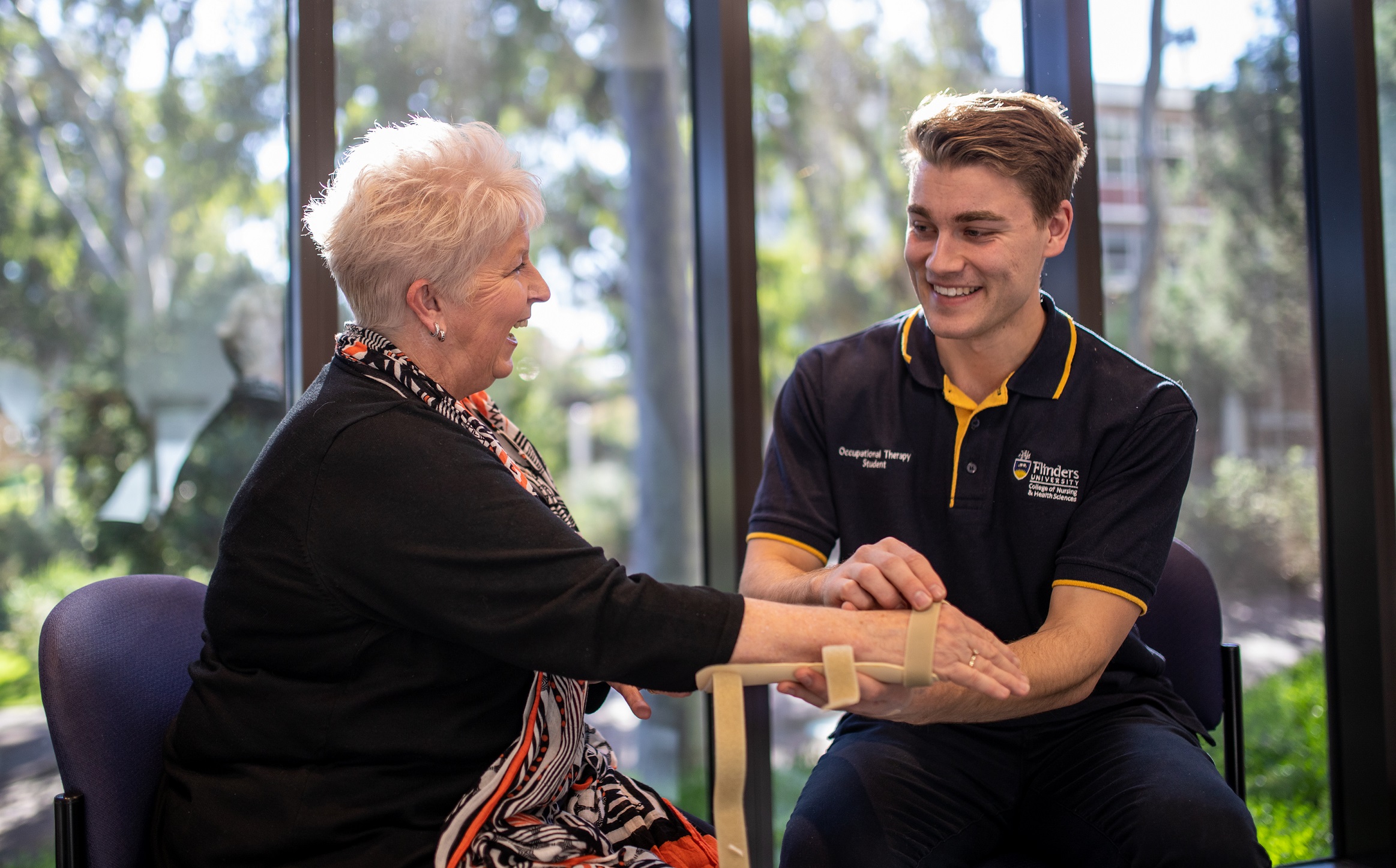
Community connections, workload management and supporting early-career allied health professionals through targeted, well-timed professional development is crucial to improving staff retention and healthcare in Australia’s rural communities, according to new research.
As Australia’s regional towns struggle with staff turnover and stretched resourcing, a Flinders University study has uncovered the personal and organisational factors that could help to both grow and retain the allied health workforce that includes physios, pharmacists, podiatrists, occupational therapists and more.

Lead author Dr Ali Dymmott, Academic Lead of Rural Allied Health at Flinders University, says the findings show success depends as much on the environment as the training itself.
“Our research found that factors including community integration, local support and the right timing of enrolment were just as critical as the program content,” says Dr Dymmott, Deputy Dean (Clinical and Community Practice) in Flinders’ College of Nursing and Health Sciences.
“It’s not simply about offering training, it’s about creating the right environment for allied health professionals to thrive in rural settings.
“The regions desperately need more allied health professionals, so it’s vital we find solutions to not only encourage people to work in rural Australia, but to feel supported and connected enough to stay.”
The project builds on the team’s previous work evaluating the South Australian government’s Allied Health Rural Generalist Pathway; a post graduate work integrated education program designed to enhance early-career allied health professionals’ clinical capabilities and improve service delivery in rural settings.
A previous evaluation found the program had a positive impact on participants and consumers, while another study found the program was economically viable, with a positive return on investment when supporting trainees.
The more recent study followed 15 allied health professionals working in regional South Australian who undertook the Rural Generalist Pathway. Through interviews and surveys with trainees, supervisors and managers, the research explored who was most likely to complete the program and why.
The results found that trainees who chose to participate, rather than being nominated by their employer, were significantly more likely to complete the program.
Those who were integrated into their local communities and who expressed a long-term commitment to rural practice were also more likely to succeed.
“Professional development is one of the most effective strategies for retaining allied health staff in rural areas, but it needs to be targeted,” says Dr Dymmott.
“When participants are motivated, supported by their organisation and connected to their community, they are far more likely to complete the training and stay in regional practice.”
The research also found that timing matters. Participants with at least a year of rural experience before commencing the pathway were more likely to succeed than those who started immediately after graduation.
“Early-career professionals often face a steep learning curve,” says Dr Dymmott. “Allowing them time to settle into rural practice before beginning postgraduate study can help them gain confidence and make the most of the program.”
The authors say the findings reinforce the value of the Rural Generalist Pathway.
“By developing generalist skills across allied health professions, including physiotherapy, occupational therapy, podiatry, speech pathology and social work, the pathway equips clinicians to deliver comprehensive care in resource-limited settings,” says Dr Dymmott.
“Our research further provides practical insights for health services planning future workforce initiatives, including selecting the right people, ensuring adequate supervision and study time, and fostering community belonging.
“Successful rural workforce programs are not one-size-fits-all. By understanding the contextual factors that support completion and retention, we can help ensure rural and remote communities continue to benefit from skilled, committed allied health professionals.”
The paper, ‘The Australian Allied Health Rural Generalist Pathway: Contextual Factors for Success’ by Alison Dymmott, Stacey George, Narelle Campbell, Joanne Lawson and Chris Brebner, is published in journal Rural and Remote Health. DOI: 10.22605/RRH9331. The research was supported by the South Australian Government’s Rural Health Workforce Strategy.