

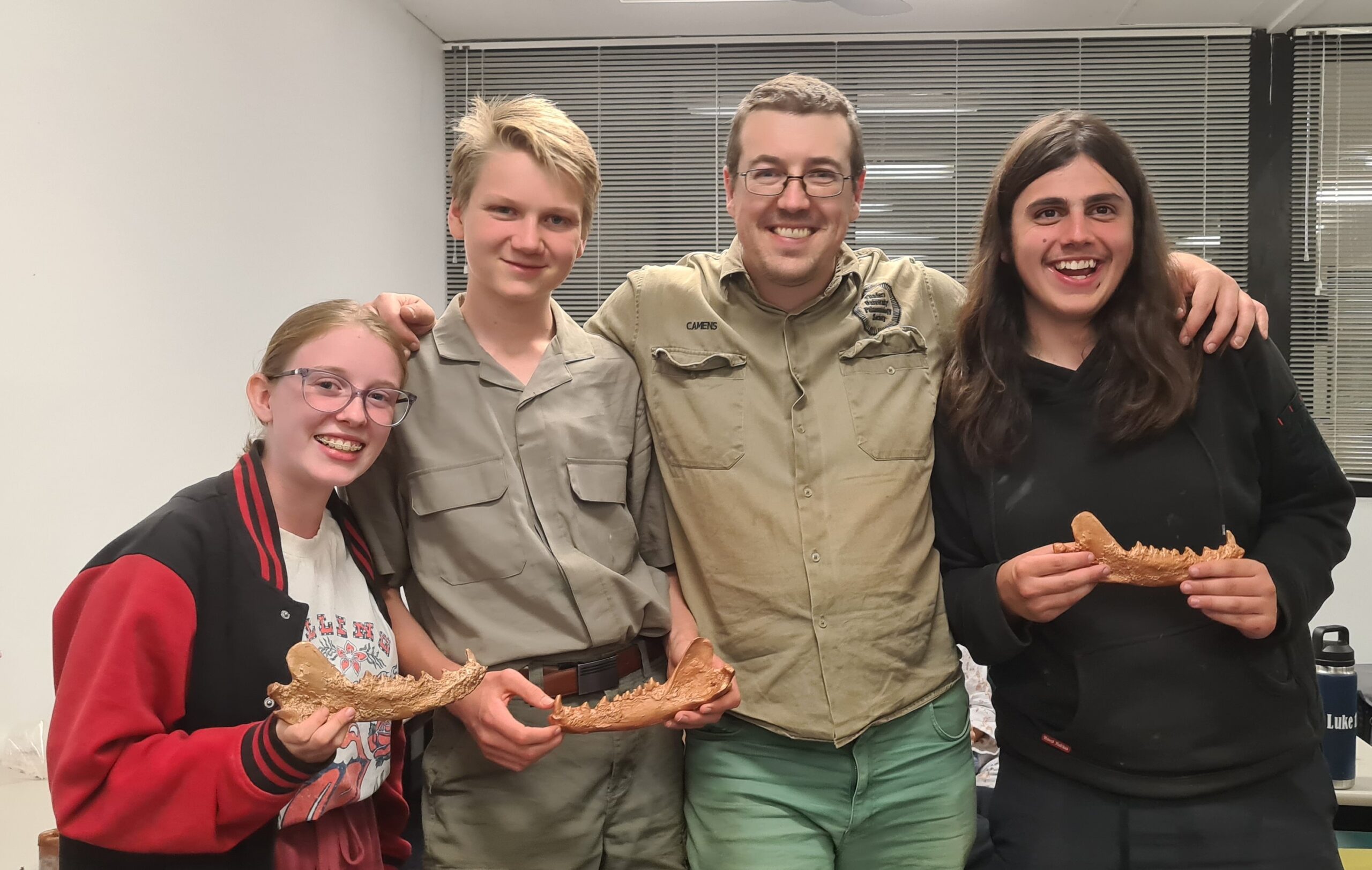
In the eery, dark depths of an Australian cave, high school students are learning first-hand about thousands of years of incredible natural history.
With help from the James Moore Memorial Palaeontology Prize, three high school students this year were given the opportunity to join an action-packed Flinders University field trip to the Wellington Caves in NSW to find out more about a key fossil site where the remains of long-forgotten animal species are being unearthed.
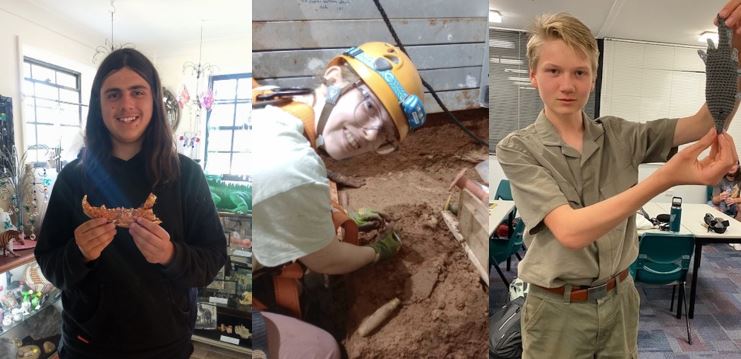
They all returned with glowing tales of their experiences and insights into ancient Australia – and Flinders University is inviting applications from across Australia to join next year’s field trip.
Jack Wilson, from Kangaroo Island Community Education school, says a highlight was finding a megafaunal echidna claw bone and also visiting the Canowindra fish fossil site.
“I found the experience of real palaeontology amazing and inspiring. The discovery of organisms vastly pre-dating us, of which fossils are the remains, has never ceased to excite me,” he says, who appreciated the week-long program as “a great way to learn”.
The field trip also provided students with an understanding of how fossil species give insights into our understanding of modern flora and fauna.
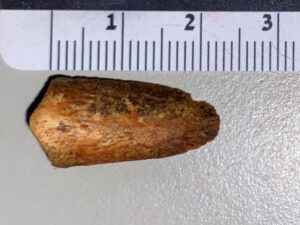
Meanwhile Salisbury High School student Matilda Coventry says she was lucky to find a red kangaroo tooth and fragments of a rodent’s skull.
“The highlight of the expedition was going in the pit and uncovering a large vertebra. It was also great to meet the Flinders palaeontologists and students, and be able to join lectures and view the fish museum,” she says.
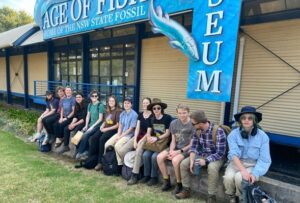
Fossil fish expert Dr Alice Clement, a supervisor on the April 2025 field trip, says the students were able to visit the fascinating Canowindra ‘fish kill’ site, which preserves a snapshot in time 363 million years ago when thousands of fish died in a drying billabong,
“The combination of the Wellington Caves site and Canowindra fish beds exposed students to a really wide temporal range, taxonomic diversity and taphonomic processes, showing how things are preserved,” says Dr Clement.
Ethan Davidson from Springbank Secondary College, was the third prize winner this year.
Professor of Palaeontology Gavin Prideaux says the Wellington Caves site provides one of the most detailed records in Australia of faunal and floral change in one area from before humans arrived, through to the first 20,000 years of human presence in the region.
“This provides us with an opportunity to explore the impacts of climatic changes and human activities on regional plant and animal communities, and is an ideal training ground for budding fossil hunters enrolled in Australia’s only palaeontology degree at Flinders University,” says Professor Prideaux, director of the Flinders Palaeontology Laboratory.

Secondary school students in years 10 and 11 across Australia can apply to take part in the 2026 field trip, by sharing what they love about fossils via the online application form here. Applications close 5pm on Wednesday 17 September.
Each year the prize is awarded to a metropolitan and a rural high school student from South Australia, and is now open to a high school student from interstate, with $400 in prize money and their field trip expenses covered.
The James Moore Memorial Palaeontology Prize was established in 2016 to honour Flinders University palaeontology graduate and researcher, James Moore, who died in a car crash in 2014 at the age of 24. Donations to support the prize are invited here.