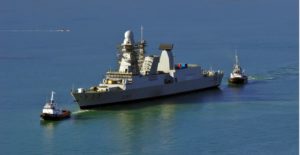
SA defence link: Flinders in Maritime Innovation Challenge
A new Maritime Innovation Challenge to foster international research collaboration by some of the world’s finest engineering minds is being unveiled by Fincantieri, CETENA and Flinders […]


A new Maritime Innovation Challenge to foster international research collaboration by some of the world’s finest engineering minds is being unveiled by Fincantieri, CETENA and Flinders […]
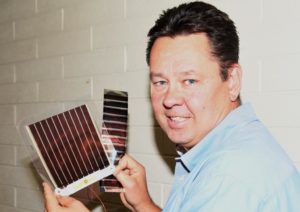
International leaders in two specialist fields of research have joined the University as Matthew Flinders Fellows in 2017.
PhD candidates Jakob Andersson and Melanie Fuller from Flinders Centre for NanoScale Science and Technology have won Australian Institute of Nuclear Science and Engineering (AINSE) top-up research scholarships
A major renewable energy and water management project in California will build on a collaboration between Infratech Industries and Flinders nanotechnology.
Prominent South Australian economist John Spoehr is joining Flinders University’s Business School as a Strategic Professor.
Three Flinders Investigators lectures celebrate National Science Week, with solar power first in the spotlight at Flinders city today.
A new specialised microscope allows Flinders scientists building nanostructures at the molecular scale to see directly what they’re doing for the first time.
Flinders University’s state-of-the-art $120 million teaching and research facility at Tonsley officially opened today.
How many scientists does it take to change the batteries in a Collins Class submarine? What? You didn’t even know submarines had batteries?